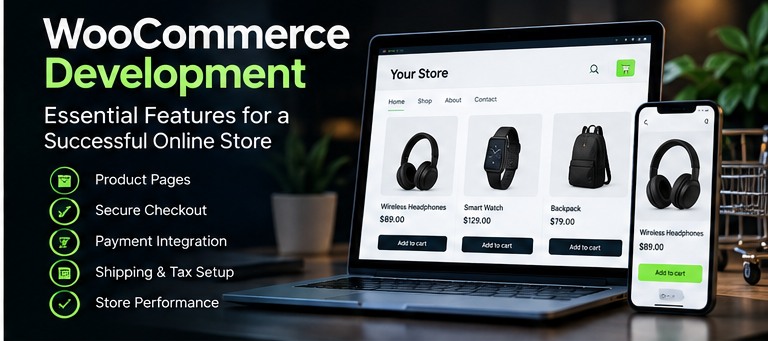
A successful store needs more than a plugin
WooCommerce gives WordPress businesses flexible tools for selling online. However, good WooCommerce development considers the complete buying experience, operational workflows and ongoing maintenance—not just the appearance of a shop page.
Product discovery and product pages
Organise categories around how customers shop. Give products clear names, useful descriptions, appropriate images and accurate availability information. For variable products, make sizes, colours and other options easy to select.
Checkout and payments
Keep checkout forms focused on information actually needed to fulfil an order. Offer payment methods suitable for your customers and region. Use maintained payment integrations and test successful, failed and cancelled transactions before launch.
Shipping and tax settings
Configure shipping zones, rates and fulfilment rules around your real operations. Tax requirements vary by location and business model, so verify settings with an appropriately qualified adviser rather than relying on generic defaults.
Performance and mobile experience
Compress product photography, minimise unnecessary scripts and review navigation on smaller screens. Dynamic cart, checkout and account pages require careful caching rules so customer-specific information is not served incorrectly.
Order management and integrations
Think about stock updates, customer emails, refunds, reporting and connections to accounting or fulfilment systems. Automate repetitive work only after confirming how errors and exceptions will be handled.
Security and maintenance
Keep extensions and WordPress updated, use reliable backups, limit privileged accounts and test updates on staging when possible. Regularly check checkout and notification workflows.
Plan your store
Review the official WooCommerce documentation, then explore my WooCommerce development services to discuss a store tailored to your requirements.